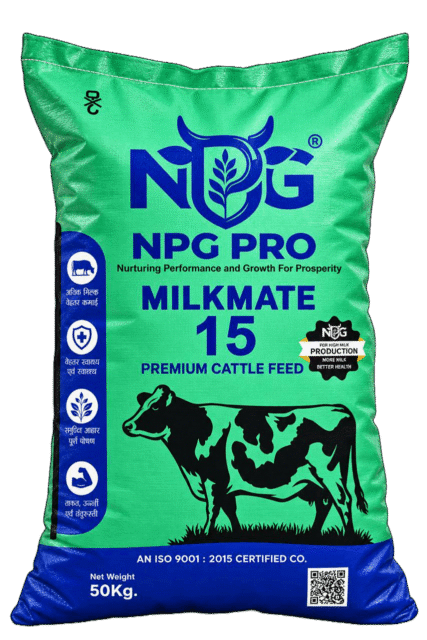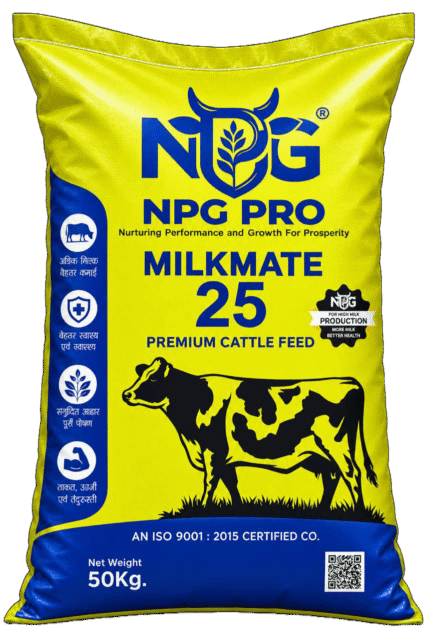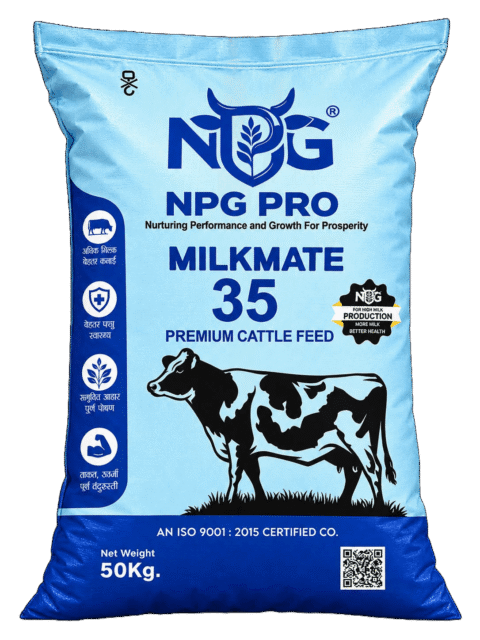
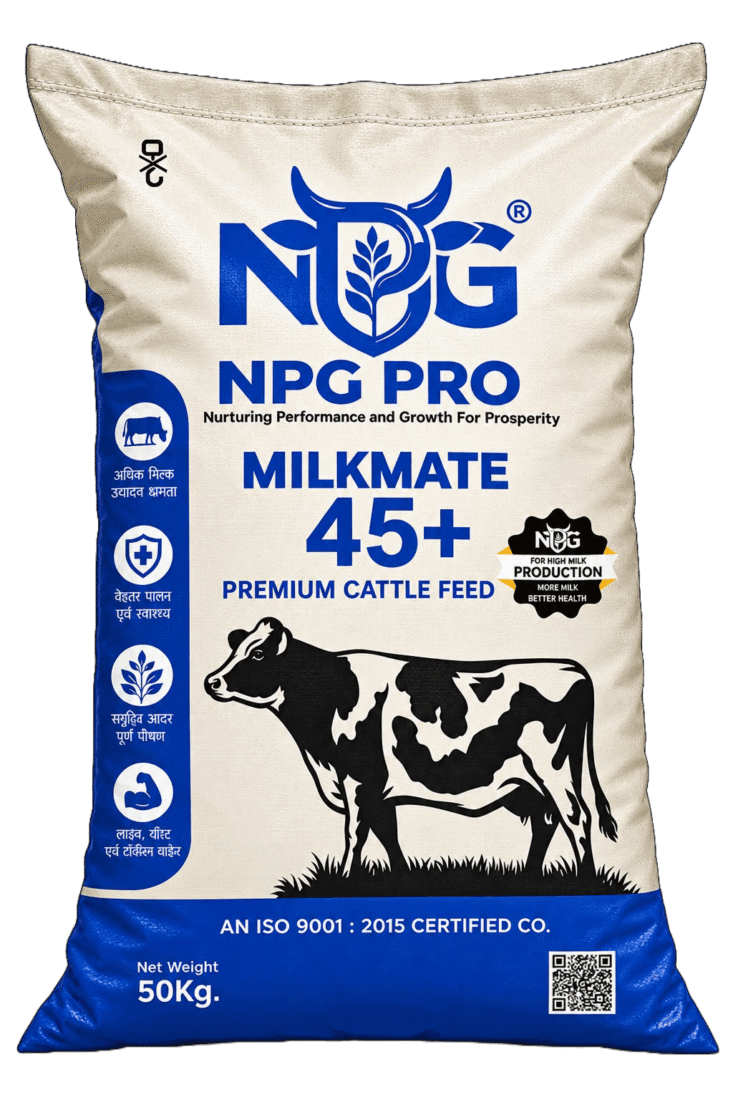
Milking feed
MILKMATE 45+
Ultra-high-yield nutrition for elite dairy cows
Product overview
MILKMATE 45+ is intended for exceptionally high-yielding dairy cows. At this production level, the complete ration must deliver substantial energy and protein without compromising rumen stability. The formula therefore emphasizes bypass protein, bypass fat, live yeast, minerals, buffers and toxin-management support.
Suitable for
Elite dairy cows producing approximately 35-45+ litres per day
Key benefits
- Supports ultra-high milk output
- Helps manage negative energy balance
- Provides bypass protein and bypass fat
- Supports rumen pH and body condition
Typical nutritional specifications
| Crude Protein | 24-26% minimum |
|---|---|
| Bypass Protein | Approximately 35-40% of total CP |
| Crude Fat | 6.5-8% minimum |
| Crude Fibre | 8-10% maximum |
| TDN | 75-80% |
| Calcium | Approximately 1.2% |
| Phosphorus | Approximately 0.8% |
| Form | 4-6 mm dense pellets or TMR-compatible feed |
Recommended feeding
- Allow approximately 2 kg daily for maintenance.
- Use approximately 1 kg of concentrate for every 2-2.5 litres of milk, subject to complete-ration formulation.
- Indicative totals in the source are about 17 kg daily at 35 litres and 21.5 kg at 45 litres.
- Split large concentrate quantities into 3-4 meals; never offer the full amount at once.
Feeding and management guidance
- Use under the guidance of a qualified dairy nutrition professional.
- Combine with about 25-30 kg quality silage or green fodder and 3-5 kg dry roughage, adjusted to dry matter and animal needs.
- Make all ration changes gradually and closely monitor rumen function and body condition.
- Provide unrestricted cool, clean water; high-yielding cows have very high water demand.
Frequently asked questions
Can MILKMATE 45+ be used for an average-yield cow?
It is designed for elite high-yielding animals. Using it outside the intended production range may create an unsuitable ration and should be assessed professionally.
Why must it be split into several meals?
Large concentrate meals can disturb rumen pH and increase acidosis risk. Smaller, frequent meals support safer intake.
Please note: Use the final pack label as the controlling product specification. Adjust the complete ration to the animal and seek professional advice for high-yielding, pregnant, newly calved or unwell animals.